Colon cancer is one of the most preventable cancers when it is detected early. The challenge is that it often develops silently, without symptoms in the early stages. That is why regular screening plays a key role in saving lives.
Two common screening options today are colonoscopy and Cologuard. Both aim to detect early signs of colon cancer, but they work in very different ways. Understanding their differences helps you choose the right test based on your risk, age, and medical history.
What is a Colonoscopy?
A colonoscopy is a procedure where a doctor uses a thin, flexible tube with a camera to examine the inside of the colon and rectum. It allows direct visualization of the intestinal lining.
Colonoscopy benefits:
- Detects polyps before they turn cancerous
- Allows removal of polyps during the same procedure
- Identifies inflammation, ulcers, and bleeding sources
- Considered the most accurate test for colon cancer detection
It is widely considered the gold standard among colon cancer screening options because it combines diagnosis and treatment in one procedure.
What is Cologuard?
Cologuard is a stool-based DNA test. It checks for abnormal DNA and hidden blood in the stool that may indicate colon cancer or precancerous growths.
Cologuard pros and cons
Pros:
- Non invasive colon cancer test
- Can be done at home
- No bowel scope or sedation required
- Convenient for people avoiding procedures
Cons:
- Cannot remove polyps
- Lower accuracy compared to colonoscopy
- May produce false positive or false negative results
- Requires follow-up colonoscopy if abnormal
- Colonoscopy vs Cologuard: Key Differences
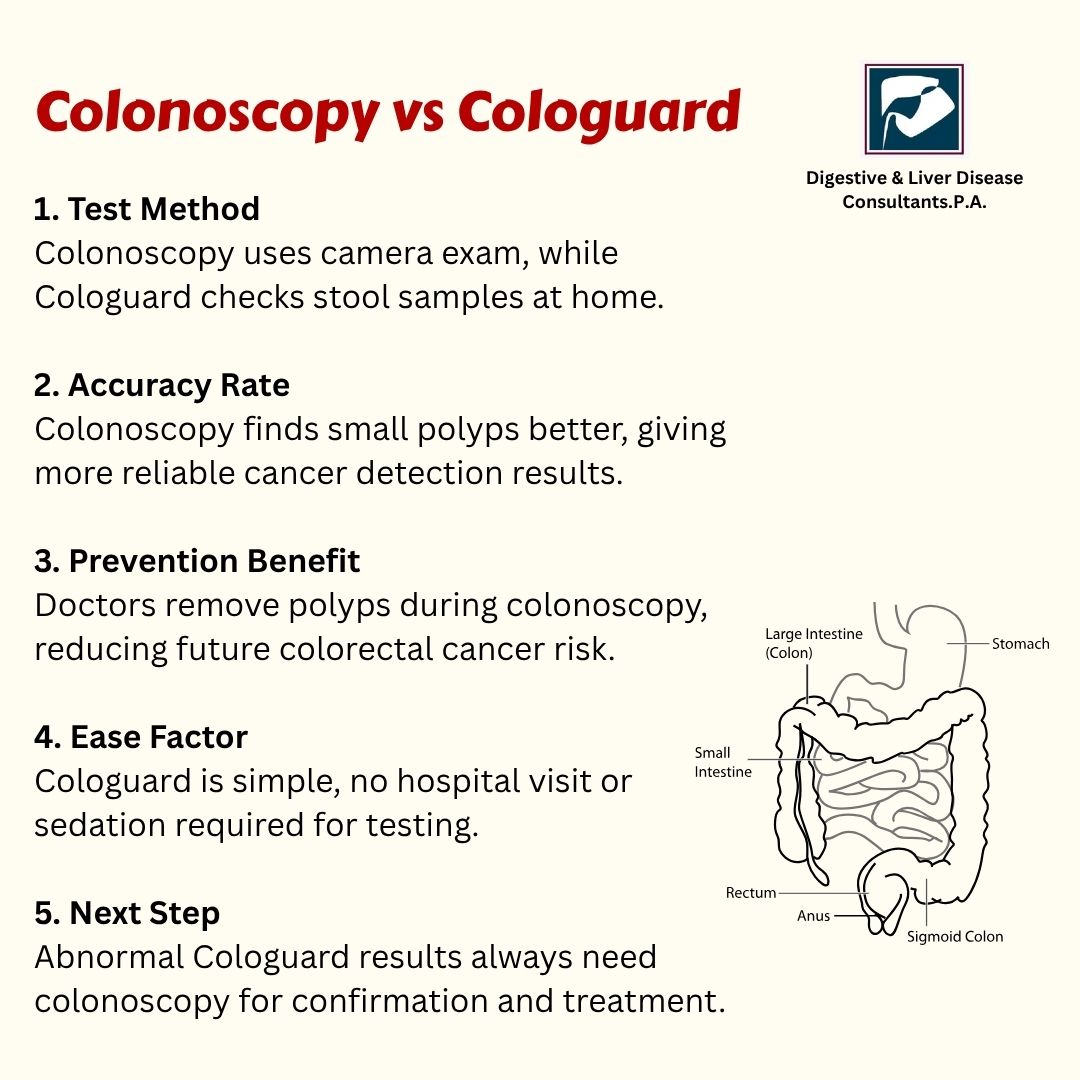
Here is a simple comparison of colonoscopy vs Cologuard:
1. Accuracy
Colonoscopy: Very high accuracy for detecting cancer and polyps
Cologuard: Good for detecting cancer but less accurate for polyps
This is where cologuard accuracy vs colonoscopy clearly differs. Colonoscopy is more reliable overall.
2. Detection ability
Colonoscopy: Detects and removes precancerous polyps
Cologuard: Detects DNA markers and blood but cannot remove growths
So in terms of colon cancer detection methods, colonoscopy is both diagnostic and preventive.
3. Preparation
Colonoscopy: Requires bowel cleansing, dietary restrictions, and sedation
Cologuard: No preparation needed, just collect stool sample
Colonoscopy preparation and risks are more demanding, but necessary for accuracy.
4. Invasiveness
Colonoscopy: Invasive procedure
Cologuard: Non invasive colon cancer test
This is why many people prefer stool-based testing initially.
5. Frequency
Colonoscopy: Usually every 10 years if normal
Cologuard: Every 3 years if normal
Colonoscopy offers longer screening intervals.
6. Risk and limitations
Colonoscopy risks:
- Mild discomfort
- Rare risk of bleeding or perforation
- Sedation-related effects
Cologuard limitations:
- Misses some precancerous polyps
- Higher chance of false alarms
- Not suitable for high-risk individuals
- Who Should Choose Which Test?
Choosing between colonoscopy vs Cologuard depends on risk level and medical history.
Colonoscopy is recommended for:
- People aged 45 and above (standard screening age)
- Those with family history of colon cancer
- Patients with symptoms like bleeding or unexplained weight loss
- Individuals with previous polyps
- Cologuard may be suitable for:
- Average-risk individuals
- People who cannot undergo or avoid colonoscopy
- Those looking for a simple at-home screening test
However, abnormal Cologuard results always require a follow-up colonoscopy.
Stool DNA Test vs Colonoscopy: What really matters?
When comparing stool DNA test vs colonoscopy, the key point is this:
Colonoscopy is both a detection and prevention tool, while Cologuard is only a detection tool.
If your goal is the most complete screening, colonoscopy remains the preferred choice. If convenience is your priority, Cologuard can be an alternative for selected cases.
Screening Tests for Colon Cancer: Why Regular Checkups Matter
Colon cancer develops slowly, often over many years. Regular screening tests for colon cancer help detect changes early, before symptoms appear.
Early detection means:
- Higher survival rates
- Less invasive treatment
- Better long-term outcomes
Delaying screening increases the risk of detecting cancer at an advanced stage.
Why Choose Digestive & Liver Disease Consultants, P.A.?
When it comes to colon cancer screening, expertise and precision matter. Digestive & Liver Disease Consultants, P.A. provides comprehensive and patient-centered gastrointestinal care.
Here’s why patients trust them:
- Experienced GI specialists in colon cancer screening and prevention
- Advanced endoscopy facilities for accurate diagnosis
- Safe and comfortable colonoscopy procedures with expert monitoring
- Personalized screening plans based on age, risk, and symptoms
- Clear guidance on choosing between colonoscopy and stool-based tests
- Focus on early detection and prevention, not just treatment
Their approach ensures patients receive the right test at the right time, reducing unnecessary risk and improving outcomes.
Conclusion
Both colonoscopy and Cologuard play important roles in colon cancer screening options, but they are not equal in capability.
Colonoscopy remains the most comprehensive test because it detects and removes precancerous polyps in one procedure. Cologuard offers a convenient non invasive colon cancer test, but it cannot replace the accuracy and preventive power of colonoscopy.
The right choice depends on your risk profile, comfort level, and medical advice. What matters most is not which test you choose, but that you do not delay screening.