Most people assume food allergies start in childhood. If you grew up eating certain foods without any problem, it feels logical to think you are safe for life. Here’s the thing. Food allergies can develop at any age, even in adults who have eaten the same foods for decades.
Adult onset food allergies are more common than many realize. They can appear suddenly, progress over time, and sometimes be mistaken for digestive issues or food intolerance. Understanding how and why this happens helps you recognize symptoms early and seek the right care.
What Is a Food Allergy?
A food allergy occurs when the immune system mistakenly identifies a specific food as harmful. In response, it triggers an immune reaction that can affect the skin, digestive system, respiratory system, or even the heart.
This is different from food intolerance, which usually involves digestive discomfort but does not involve the immune system.
Common allergenic foods include:
- Milk
- Eggs
- Peanuts
- Tree nuts
- Shellfish
- Fish
- Wheat
- Soy
While some allergies are more common in children, others often appear in adulthood.
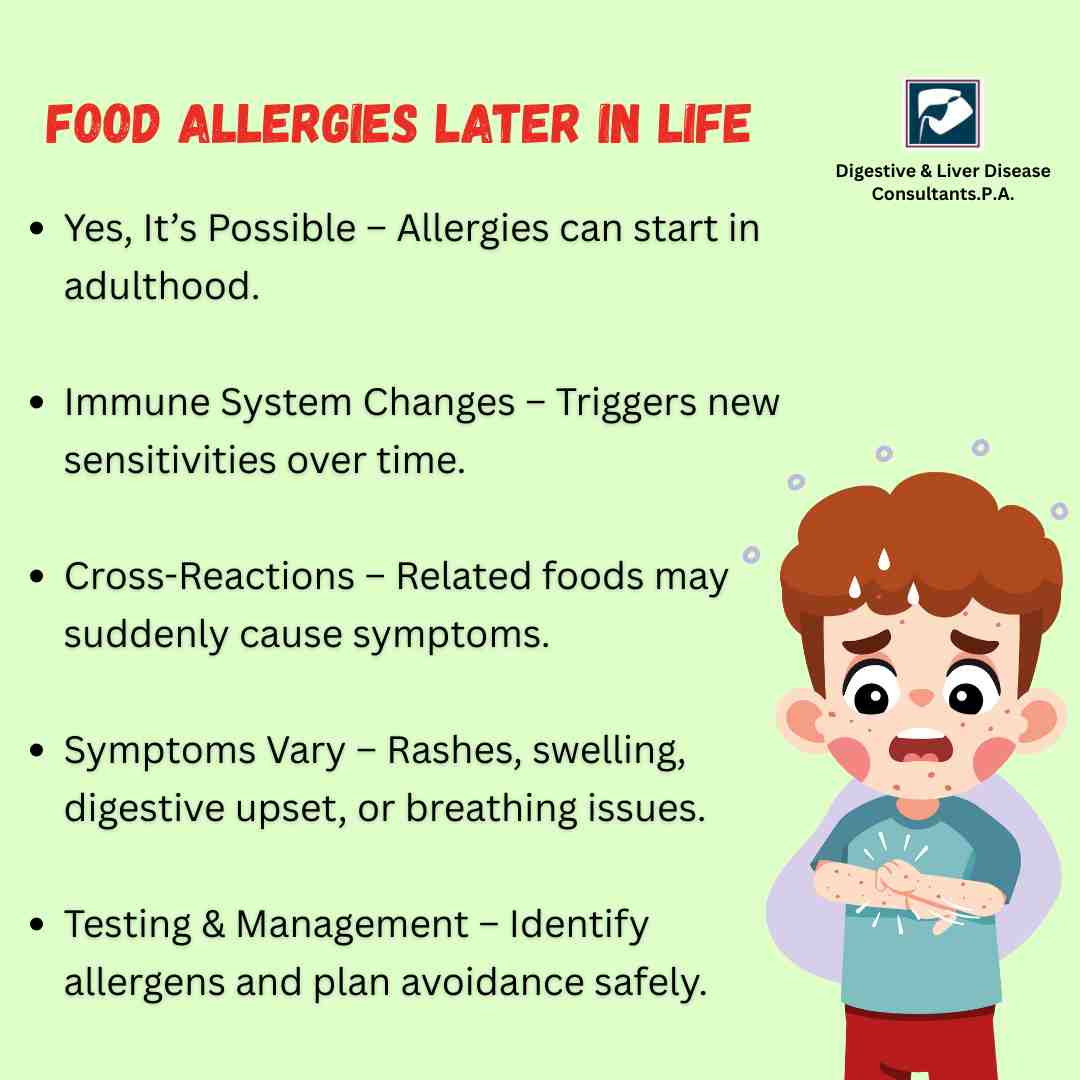
Can Food Allergies Really Start Later in Life?
Yes. Adults can develop food allergies even if they previously tolerated the food without any issues. In fact, shellfish allergies are one of the most common adult onset food allergies.
Several factors can change how your immune system reacts over time, making a previously safe food suddenly problematic.
Why Do Food Allergies Develop in Adults?
Changes in the Immune System
As we age, the immune system evolves. Infections, chronic inflammation, or immune system imbalance can cause the body to react differently to foods.
Gut Health and Digestive Changes
Your gut plays a major role in immune regulation. Conditions such as
- Irritable bowel syndrome
- Inflammatory bowel disease
- Chronic acid reflux
- Gut infections
can alter the gut lining and increase sensitivity to certain foods.
Hormonal Changes
Hormonal shifts related to pregnancy, menopause, thyroid disorders, or other endocrine conditions may influence immune responses and trigger new allergies.
Environmental Exposure
Repeated exposure to certain foods or environmental allergens can sensitize the immune system over time, leading to delayed allergic reactions.
Stress and Lifestyle Factors
Chronic stress can weaken the immune system and disrupt gut health, increasing the risk of allergic reactions.
Common Symptoms of Adult Onset Food Allergies
Symptoms can vary from mild to severe and may appear minutes to hours after eating.
Digestive Symptoms:
- Abdominal pain
- Bloating
- Nausea or vomiting
- Diarrhea
- Blood or mucus in stool
These symptoms are often mistaken for acid reflux, gastritis, or food intolerance.
Skin Symptoms:
- Hives
- Itching
- Rashes
- Swelling of lips or face
Respiratory Symptoms
- Nasal congestion
- Wheezing
- Shortness of breath
- Throat tightness
Severe Reactions
In rare cases, food allergies can cause anaphylaxis, a life threatening reaction that requires immediate medical care.
Food Allergy vs Food Intolerance
This distinction is important.
Food allergy
- Involves the immune system
- Can cause severe reactions
- Symptoms may affect multiple organs
Food intolerance
- Usually limited to digestion
- Does not involve the immune system
- Symptoms are uncomfortable but not life threatening
Only proper medical testing can confirm the difference.
How Are Food Allergies Diagnosed?
Diagnosing food allergies in adults requires a detailed evaluation. Doctors may recommend
- Detailed symptom and diet history
- Blood tests to detect allergy related antibodies
- Skin prick testing
- Elimination diets under medical supervision
- Endoscopy or colonoscopy if digestive symptoms are severe
Self diagnosis or eliminating multiple foods without guidance can lead to nutritional deficiencies and delayed treatment.
Can Food Allergies Go Away?
Some food allergies may improve over time, while others are lifelong. Adult onset allergies are more likely to persist compared to childhood allergies.
Strict avoidance of trigger foods and proper management help prevent reactions and complications.
Managing Food Allergies in Daily Life
Living with a food allergy requires awareness, not fear.
Helpful steps include:
- Reading food labels carefully
- Informing restaurants about allergies
- Keeping prescribed medications accessible
- Maintaining a balanced diet with safe alternatives
- Following up regularly with a digestive specialist
Education and planning make daily life manageable and safe.
When Should You See a Doctor?
You should consult a specialist if
- Symptoms appear repeatedly after eating certain foods
- Digestive symptoms persist despite dietary changes
- You experience unexplained skin or breathing reactions
- There is blood in stool or ongoing abdominal pain
Early evaluation prevents complications and improves quality of life.
Why Choose Digestive & Liver Disease Consultants, P.A. ?
Food allergies often overlap with digestive disorders, making expert evaluation essential. Digestive & Liver Disease Consultants, P.A. offers comprehensive care for patients experiencing food related symptoms.
Why patients trust our team:
- Experienced board certified gastroenterologists
- Advanced diagnostic testing for digestive and immune related conditions
- Individualized treatment plans based on your symptoms
- Focus on gut health and long term wellness
- Compassionate, patient centered approach
We look beyond symptoms to identify the root cause and help you regain confidence in your diet and digestive health.
Preventing Complications from Food Allergies
While not all food allergies can be prevented, early diagnosis reduces risks. Managing gut health, avoiding unnecessary food restrictions, and following medical guidance are key steps in staying healthy.
Conclusion
Food allergies are not limited to childhood. They can develop later in life due to changes in immunity, gut health, hormones, or environmental factors. Symptoms may be subtle or severe, and digestive signs are often overlooked.
If certain foods suddenly cause discomfort, rashes, or breathing issues, it is important to seek medical evaluation. Proper diagnosis helps you manage symptoms safely and avoid unnecessary dietary restrictions.
If you are experiencing symptoms of a food allergy or ongoing digestive discomfort, do not ignore them. Early evaluation makes a real difference. Consult our top gastro specialist at Digestive & Liver Disease Consultants, P.A.